Аукцион просмотр
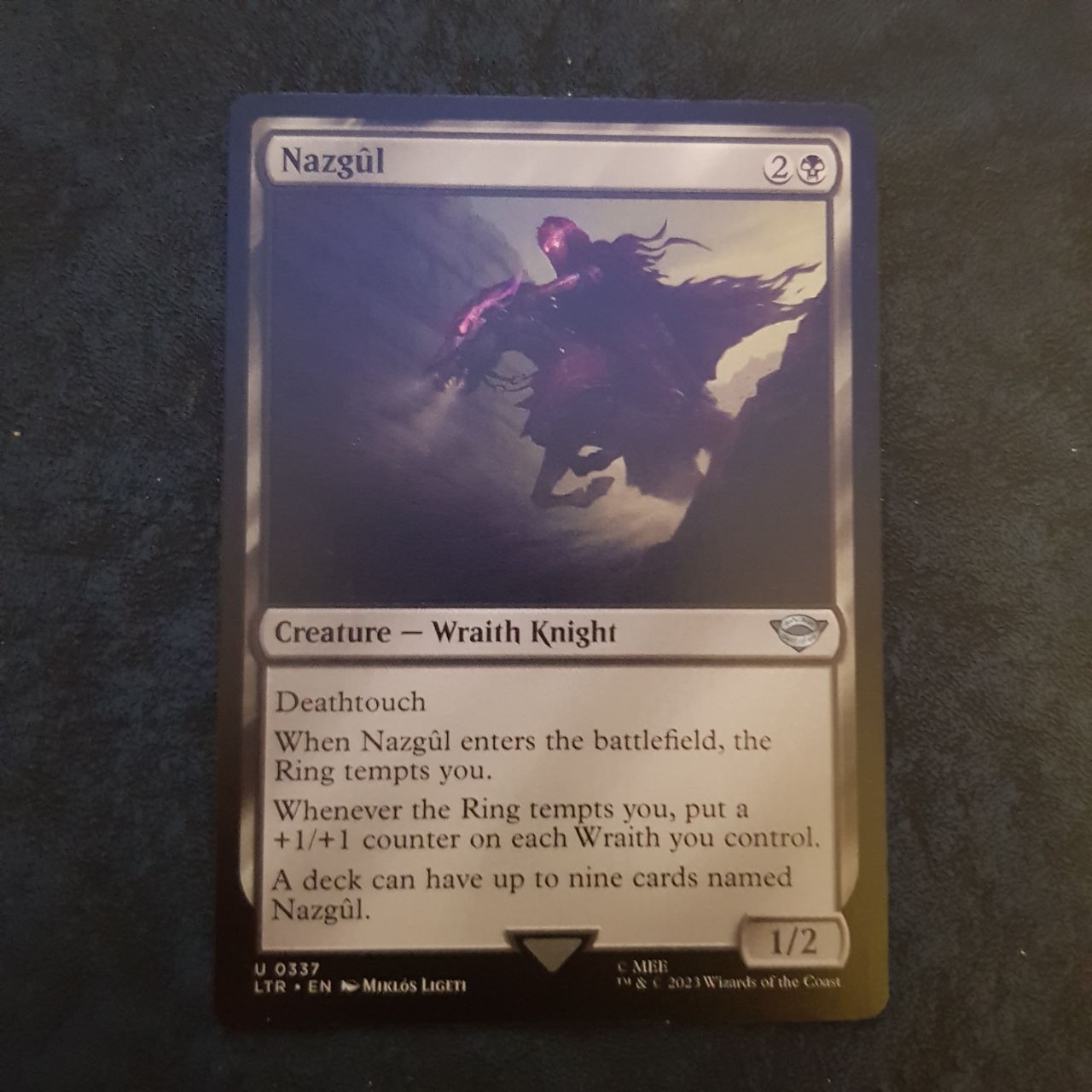
Nazgul | LTR 337
Продавец
cocount 107
Состояние
NM
До окончания
1д 19ч
500
1 ставки(ок)
Доставка
Москва почта
Почта озон яндекс доставка 150р, любые другие варианты
Оплата
Наличные Банковская карта
как угодно
Описание
Some of you may have heard that there was, a year or more ago, a Congress in Oxford, an Esperanto Congress; or you may not have heard. Personally I am a believer in an ‘artificial’ language, at any rate for Europe - a believer, that is, in its desirability, as the one thing antecedendy necessary for uniting Europe, before it is swallowed by non-Europe; as well as for many other good reasons - a believer in its possibility because the history of the world seems to exhibit, as far as I know it, both an increase in human control of (or influence upon) the uncontrollable, and a progressive widening of the range of more or less uniform languages. Also I particularly like Esperanto, not least because it is the creation ultimately of one man, not a philologist, and is therefore something like a ‘human language bereft of the inconveniences due to too many successive cooks’ - which is as good a description of the ideal artificial language (in a particular sense) as I can give.1 No doubt the Esperantist propaganda touched on all these points. I cannot say. But it is not important, because my concern is not with that kind of artificial language at all. You must tolerate the stealthy approach. It is habitual. But in any case my real subject tonight is a stealthy subject. Indeed nothing less embarrassing than the unveiling in public of a secret vice. Had I boldly and brazenly begun right on my theme I might have called my paper a plea for a New Art, or a New Game, if occasional and painful confidences had not given me grave cause to suspect that the vice, though secret, is common; and the art (or game), if new at all, has at least been discovered by a good many other people independently. The practitioners are all so bashful, however, that they hardly ever show their works to one another, so none of them know who are the geniuses at the game, or who are the splendid ‘primitives’ - whose neglected works, found in old drawers, may possibly be purchased at great price (not from the authors, or their heirs and assigns!) for American museums, in after days when the ‘art’ has become acknowledged. I won’t say ‘general’ ! - it is too arduous and slow: I doubt if any. devotee could produce more than one real masterpiece, plus at most a few brilliant sketches and outlines, in a life-time. I shall never forget a little man - smaller than myself - whose name I have forgotten, revealing himself by accident as a devotee, in a moment of extreme ennui, in a dirty wet marquee filled with trestle tables smelling of stale mutton fat, crowded with (mostly) depressed and wet creatures. We were listening to somebody lecturing on map-reading, or camp-hygiene, or the art of sticking a fellow through without (in defiance of Kipling) bothering who God sent the bill to; rather we were trying to avoid listening, though the Guards’ English, and voice, is penetrating. The man next to me said suddenly in a dreamy voice; ‘Yes, I think I shall express the accusative case by a prefix!’ A memorable remark! Of course by repeating it I have let the cat, so carefully hidden, out of its bag, or at least revealed the whiskers. But we won’t bother about that for a moment. Just consider the splendour of the words! ‘/ shall express the accusative case.’ Magnificent! Not ‘it is expressed’, nor even the more shambling ‘it is sometimes expressed’, nor the grim ‘you must learn how it is expressed’. What a pondering of alternatives within one’s choice before the final decision in favour of the daring and unusual prefix, so personal, so attractive; the final solution of some element in a design that had hitherto proved refractory. Here were no base considerations of the ‘practical’, the easiest for the ‘modern mind’, or for the million - only a question of taste, a satisfaction of a personal pleasure, a private sense of fitness. As he said his words the little man’s smile was full of a great delight, as of a poet or painter seeing suddenly the solution of a hitherto clumsy passage. Yet he proved as close as an oyster. I never gathered any further details of his secret grammar; and military arrangements soon separated us never to meet again (up to now at any rate). But I gathered that this queer creature - ever afterwards a little bashful after inadvertently revealing his secret — cheered and comforted himself in the tedium and squalors of ‘training under canvas’ by composing a language, a personal system and symphony that no else was to study or to hear. Whether he did this in his head (as only the great masters can), or on paper, I never knew. It is incidentally one of the attractions of this hobby that it needs so little apparatus! How far he ever proceeded in his composition, I never heard. Probably he was blown to bits in the very moment of deciding upon some ravishing method of indicating the subjunctive. Wars are not favourable to delicate pleasures. But he was not the only one of his kind. I would venture to assert that, even if I did not know it from direct evidence. It is inevitable, if you ‘educate’ most people, many of them more or less artistic or creative, not solely receptive, by teaching them languages. Few philologists even are devoid of the making instinct - but they often know but one thing well; they must build with the bricks they have. There must be a secret hierarchy of such folk. Where the little man stood in this, I do not know. High, I should guess. What range of accomplishment there is among these hidden craftsmen, I can only surmise - and I surmise the range runs, if one only knew, from the crude chalkscrawl of the village schoolboy to the heights of palaeolithic or bushman art (or beyond). Its development to perfection must none the less certainly be prevented by its solitariness, the lack of interchange, open rivalry, study or imitation of others’ technique. I have had some glimpses of the lower stages. I knew two people once - two is a rare phenomenon - who constructed a language called Animalic almost entirely out of English animal, bird, and fish names; and they conversed in it fluently to the dismay of bystanders. I was never fully instructed in it, nor a proper Animalic-speaker; but I remember out of the rag-bag of memory that dog nightingale woodpecker forty meant ‘you are an ass’. Crude (in some ways) in the extreme. There is here, again a rare phenomenon, a complete absence of phonematic invention which at least in embryo is usually an element in all such constructions. Donkey was 40 in the numeral system, whence forty acquired a converse meaning. I had better say at once: ‘Don’t mistake the cat which is slowly emerging from the bag!’ I am not dealing with that curious phenomenon ‘nursery-languages’, as they are sometimes called the people I quote were of course young children and went on to more advanced forms later - some of which languages are as individual and peculiar as this one, while some acquire a wide distribution and pass from nursery to nursery and school to school, even country to country, in a mysterious way without any adult assistance, though new learners usually believe themselves in possession of a secret. Like the insertion type of ‘language’. I can still remember my surprise after acquiring with assiduous practice great fluency in one of these ‘languages’ my h6rror at overhearing two entirely strange boys conversing in it. This is a very interesting matter - connected with cant, argot, jargon, and all kinds of human undergrowth, and also with games and many other things. But I am not concerned with it now, even though it has affinities with my topic A purely linguistic element, which is my subject, is found sometimes even in this childish makebelieve. The distinction - the test by which one can discriminate between the species I am talking about, from the species I am leaving aside - lies, I think, in this. The argot-group are not primarily concerned at all with relations of sound and sense; they are not (except casually and accidentally like real languages) artistic - if it is possible to be artistic inadvertently. They are ‘practical’, more severely so even than real languages, actually or in pretence. They satisfy either the need for limiting one’s intelligibility within circles whose bounds you can more or less control or estimate, or the fun found in this limitation. They serve the needs of a secret and persecuted society, or the queer instinct for pretending you belong to one. The means being ‘practical’ are crude - they are usually grabbed randomly by the young or by rude persons without apprenticeship in a difficult art, often with little aptitude for it or interest in it. That being so, I would not have quoted the ‘animalic’-children, if I had not discovered that secrecy was no part of their object. Anyone could learn the tongue who bothered. It was not used deliberately to bewilder or to hoodwink the adult. A new element comes in. The fun must have been found in something else than the secret-society or the initiation business. Where? I imagine in using the linguistic faculty, strong in children and excited by lessons consisting largely of new tongues, purely for amusement and pleasure. There is something attractive in the thought — indeed I think it gives food for various thoughts, and I hope that, though I shall hardly indicate them, they will occur to my hearers. The faculty for making visible marks is sufficiently latent in all for them (caught young enough) to learn, more or less, at least one graphic system, with severely practical object. It is more highly developed in others, and may lead not only to heights of illumination and calligraphy for sheer pleasure, but it is doubtless allied in many ways to drawing. The linguistic faculty - for making so-called articulate noises - is sufficiendy latent in all for them (caught young as they always are) to learn, more or less, at least one language with merely or mainly practical object. It is more highly developed in others, and may lead not only to polyglots but to poets; to savourers of linguistic flavours, to learners and users of tongues, who take pleasure in the exercise. And it is allied to a higher art of which I am speaking, and which perhaps I had better now define. An art for which life is not long enough, indeed: the construction of imaginary languages in full or outline for amusement, for the pleasure of the constructor or even conceivably of any critic that might occur. For though I have made much of the secrecy of the practice of this art, it is an inessential, and an accidental product of circumstances. Individualistic as are the makers, seeking a personal expression and satisfaction, they are artists and incomplete without an audience. Though like this or any other society of philologists they may be aware that their goods have not a wide popular appeal or a market, they would not be averse to a competent and unbiassed hearing in camera. But I have somewhat interrupted my argument, and anticipated the end of my line of development, which was to lead from the cruder beginnings to the highest stages. I have seen glimpses of higher stages than animalic. As one proceeds higher in the scale doubtless diverse ramifications begin: ‘language’ has more than one aspect, which may be specially developed. I can imagine developments I have never met. A good example of a further stage was provided by one of the Animalic community - the other (notably not the originator) dropped off and became interested in drawing and design. The other developed an idiom called Nevbosh, or the ‘New Nonsense’. It still made, as these play-languages will, some pretence at being a means of limited communication - that is, in the lower stages the differentiation between the argot-group and the art-group is imperfect. That is where I came in. I was a member of the jWz^cvA-speaking world. Though I never confessed it, I was older in secret vice (secret only because apparently bereft of the hope of communication or criticism), if not in years, than the Nevbosh originator. Yet, though I shared in the vocabulary, and did something to affect the spelling of this idiom, it remained a usable business, and intended to be. It did become too difficult to talk with Animalic fluency - because games cannot take up all one’s time with Latin and mathematics and such things forced upon one’s notice, but it was good enough for letters, and even bursts of doggerel song. I believe I could still write down a much bigger vocabulary of Nevbosh than Busbecq recorded for Crimean Gothic,2 though more than 20 years3 have gone by since it became a dead language. But I can only remember entire one idiotic connected fragment: Dar fys ma vel gom co palt ‘hoc Pys go iskili far maino woe ? Pro si go fys do roc de Do cat ym maino bocte De volt fac soc ma taimful gyrdc!’ Now this vocabulary, if ever I were foolish enough to write it down, and these fragments, of which the only surviving native can still supply a translation, are crude — not in the extreme, but still crude. I have not sophisticated them. But they already provide quite instructive matter for consideration. It is not yet sufficiendy developed to present the points of interest for a learned society which I hope may yet arise; the interest is still chiefly discoverable by the scientific and the philological, and so only a side-line with me tonight. But I will touch on it, because it will, I think, be found not altogether foreign to the present purpose of this absurd paper. One of the points I see is this: What happens when people try to invent ‘new words’ (groups of sounds) to represent familiar notions. Whether the notion becomes in any way affected or not we will leave aside — it is negligible at any rate in a case like Nevbosh, which is entirely dominated by an established natural idiom. This ‘invention’ is probably always going on - to the distraction of ‘etymology’, which more or less assumes, or used to assume, creation once for all in a distant past. Such a special case as Nevbosh, supported by others like it, of which no doubt one could find many examples if one knew where to look, might throw light on this interesting problem, which is really part of a more advanced etymology and semantic. In traditional languages invention is more often seen undeveloped, severely limited by the weight of tradition, or alloyed with other linguistic processes, and finds outlet chiefly in the modification of existing soundgroups to ‘fit’ the sense (‘fit’ begs a large question, but never mind), or even modification of sense to ‘fit’ the sound. In this way, in either case, ‘new words’ are really made - since a ‘word’ is a group of sounds temporarily more or less fixed +an associated notion more or less defined and fixed in itself and in its relation to the sound-symbol. Made not created. There is in historic language, traditional or artificial, no pure creation in the void. In Nevbosh we see, of course, no real breaking away from ‘English’ or the native traditional language. Its notions - their associations with certain sounds, even their inherited and accidental confusions; their range and limits - are preserved. Do is ‘to’, and a prefixed inflexion marking the infinitive. Pro is ‘for, four’ and the conjunction ‘for’. And so on. This part is not then of any interest. Only on the phonematic side is there much interest. What directed the choice of non-traditional sound-groups to represent the traditional ones (with their sense-associations) as perfectly equivalent counters? Clearly ‘phonetic predilection’ — artistic phonetic expression - played as yet a very small part owing to the domination of the native language, which still kept Nevbosh almost in the stage of a ‘code’. The native language constantly appears with what at first sight appears casual unsystematic and arbitrary alteration. Yet even here there is a certain interest — little or no phonetic knowledge was possessed by its makers, and yet there appears an unconscious appreciation of certain elementary phonetic relations: alteration is mainly limited to shifting within a defined series of consonants, say for example the dentals: d, f, />, 6, &c. Dar/there; do/to; cat/get; iw/Z/would. Or where this is broken, as in jym/in, we have recognition of the fact that m/n, though technically made at different contact points, have in their nasality and resonance a similarity which overrides the more mechanical distinction - a fact which is reflected, shall we say, both in the case of m\n interchange in real languages (such as Greek), or in my inability to feel greatly wounded by m/n assonances in a rhyming poem. The influence of learnt languages - or since all are learnt, better ‘lesson-languages’ - is unfortunately prominent in this Nevbosh example, an influence which weakens its interest in some respects, though it brings in an additional point for consideration. The intricate blending of the native with the laterlearnt is, for one thing, curious. The foreign, too, shows the same arbitrary alteration within phonetic limits as the native. So ror/‘rogo’ ask; go/‘ego’ I; z^//‘vieil, vieux’ old; gomj1 homo’ man - the ancient Germanic languages did not contribute;4 pysI can - from French; si/if - pure plagiarism; palj1 parler’ speak, say; taiml*timeo’ fear; and so on. Blending is seen in: zw/f/‘volo, vouloir’ + ‘will, would’ ; fysfim ' + ‘was’, was, were; ro/‘qui’ + ‘who’ ; far/‘fero’ -f ‘bear’, carry. And in a curious example: woe is both the native word reversed, and connected with vacca, vache (I happen to remember that this is actually the case); but it bred the beginnings of a code-like system, dependent on English, whereby native -ow >-oc, a sort of primitive and arbitrary sound-law: hoc/how; gyrocfrow. Perhaps it was not worth going into so deeply. A code is not an interesting subject. Only those words which have no obvious association in traditional or school-learnt languages would possess a deeper interest - and one would have to possess a very great number of documented examples to learn anything of value from them, more than the arousing of a passing curiosity. In this connexion iski-li ‘possibly’ is odd. Who can analyse it? I can also remember the word lint ‘quick, clever, nimble’, and it is interesting, because I know it was adopted because the relation between the sounds lint and the idea proposed for association with them gave pleasure. Here is the beginning of a new and exciting element. Certainly, just as in real languages, the ‘word’ once thus established, though owing its being to this pleasure, this sense of fitness, quickly became a mere chance symbol dominated by the notion and its circle of association, not by the relation of sound and sense - thus it was soon used for mental quickness, and finally the normal Nevbosh idiom for ‘learn* was catlint (become ‘lint’), and for ‘teach’/ac/zVtf (make ‘lint’). Generally speaking, however, only the incipient pleasure found in linguistic invention, in getting free from the necessarily limited scope invention has for any individual within a traditional sphere, makes these rude fragments of interest. This idea of using the linguistic faculty for amusement is however deeply interesting to me. I may be like an opium-smoker seeking a moral or medical or artistic defence for his habit. I don’t think so. The instinct for ‘linguistic inventipn’ - the fitting of notion to oral symbol, and pleasure in contemplating the new relation established, is rational, and not perverted. In these invented languages the pleasure is more keen than it can be even in learning a new language - keen though it is to some people in that case - because more personal and fresh, more open to experiment of trial and error. And it is capable of developing into an art, with refinement of the construction of the symbol, and with greater nicety in the choice of notional-range. Certainly it is the contemplation of the relation between sound and notion which is a main source of pleasure. We see it in an alloyed form in the peculiar keenness of the delight scholars have in poetry or fine prose in a foreign language, almost before they have mastered that language, and long after they have become reasonably familiar with it. Certainly in the case of dead languages no scholar can ever reach the full position of a native with regard to the purely notional side of the language he studies, nor possess and feel all the undercurrents of connotation from period to period which words possess. His compensation remains a great freshness of perception of the word-form. Thus, even seen darkly through the distorting glass of our ignorance of the details of Greek pronunciation, our appreciation of the splendour of Homeric Greek in word-form is possibly keener, or more conscious, than it was to a Greek, much else of other elements of poetry though we may miss. The same is true of Anglo-Saxon. It is one of the real arguments for devoted study of ancient languages. Nor does it mean self-deception - we need not believe we are feeling something that was not there; we are in a position to see some things better at a distance, others more dimly. The very word-form itself, of course, even unassociated with notions, is capable of giving pleasure - a perception of beauty, which if of a minor sort is not more foolish and irrational than being sensitive to the line of a hill, light and shade, or colour. Greek, Finnish, Welsh (to name at random languages which have a very characteristic and in their different ways beautiful wordform, readily seizable by the sensitive at first sight) are capable of producing this pleasure. I have heard others independendy voice my own feeling that the Welsh names on coal-trucks have stirred a sense of beauty, provided you have the barest knowledge of Welsh spelling sufficient for them to cease to be jumbles of letters. There is purely artistic pleasure, keen and of a high order, in studying a Gothic dictionary from this point of view; and from it a part, one element, of the pleasure which might have been gained from the resplendent ‘lost Gothic’ poetry may still be recaptured. It is then in the refinement of the word-form that the next progress above the Nevbosh stage must consist. Most unfortunately above this second still crude Nevbosh stage the development tends to dive underground, and to be difficult to document with examples. Most of the addicts reach their maximum of linguistic playfulness, and their interest is swamped by greater ones, they take to poetry or prose or painting, or else it is overwhelmed by mere pastimes (cricket, meccano, or suchlike footle) or crushed by cares and tasks. A few go on, but they become shy, ashamed of spending the precious commodity of time for their private pleasure, and higher developments are locked in secret places. The obviously unremunerative character of the hobby is against it - it can earn no prizes, win no competitions (as yet) - make no birthday presents for aunts (as a rule) - earn no scholarship, fellowship, or worship. It is also - like poetry - contrary to conscience, and duty; its pursuit is snatched from hours due to self-advancement, or to bread, or to employers. This must be my excuse for becoming more and more autobiographical - regretfully, and from no arrogance. I should much prefer the greater objectivity of studying other people’s efforts. The crude Nevbosh was a ‘language’ in a fuller sense than things we are coming to. It was intended in theory for speaking, and writing, between one person and another. It, was shared. Each element had to be accepted by more than one to become current, to become part of Nevbosh at all. It was therefore hampered in ‘symmetry’, either grammatical or phonetic, as traditional languages are. Only the handing on to a wider group, going on during a long time, could have produced in it some of those effects of partially achieved and overlaid symmetries which mark all the traditional human tongues. Nevbosh represented the highest common linguistic capacity of a small group, not the best that could be produced by its best member. It remained unfreed from the purely communicative aspect of language - the one that seems usually supposed to be the real germ and original impulse of language. But I doubt this exceedingly; as much as one doubts a poet’s sole object, even primary one, being to talk in a special way to other people. The communication factor has been very powerful in directing the development of language; but the more individual and personal factor - pleasure in articulate sound, and in the symbolic use of it, independent of communication though constantly in fact entangled with it - must not be forgotten for a moment. Naffann - the next stage of which I have evidence to put before you - shows very clear signs of a development in this direction. It was a purely private production, partly overlapping the last stages of Nevbosh, never circulated (though not for lack of the wish). It has long since been foolishly destroyed, but I can remember more than enough, accurately and without sophistication, for my present purpose. One set of individual predilections - governed powerfully as is inevitable by accidents of knowledge, but not made by them - comes to some sort of expression. The phonetic system is limited, and is no longer that of the native language, except that it does not contain elements entirely alien to it; there is a grammar, again a matter of predilection and choice of means. (With regard to phonetic system one may say in an aside that the absence of alien elements is not of first-class importance; a very alien word-form could be constructed out of purely English elements; since it is as much in habitual sequences and combinations as in individual ‘phonemes’ or sound-units that a language, or a language-maker, achieves individuality. A fact which can be readily appreciated by turning English backwards — phonetically, not by spelling. Such a ‘native’ word as scratch becomes Starks,6 each ‘phoneme’ being perfectly native, the total entirely foreign owing to the fact that English rarely has the sequence St - only when it is clearly analysable as f + suffix (crushed), and never initially; and never has ar + consonant. It is this fact, of course, which gives English scholars’ ‘Greek’ still a Greek phonetic character - a representation of Greek with other counters, as Nevbosh was a representation of English on the notional side - in spite of its purely English detail. Such scholars need not, however, be unduly comforted - their usage still misrepresents Greek in vital ways, and might be improved vastly still using only English phonetic detail.) To return - I will give you a brief sample of Naffann. O Naffarinos cuta vu navru cangor luttos ca vuna ti^ranar, dana maga tier ce vru enca vun’ farta once ya meriita vnna maxt’ amamen. I don’t mean to subject this example to the tedious consideration of origins which I inflicted upon you and Nevbosh. Etymologically, as you would see if I bothered to translate, it has no greater interest than Nevbosh; vru ‘ever’ - a curiously predominant association in my languages, which is always pushing its way in (a case of early fixation of individual association, I suppose, which cannot now be got rid of) - is the only word of interest from this point of view. In inventing languages one inevitably develops a style and even mannerisms - even though it is one of the elements of the game to study how a linguistic ‘style’ is composed.
Другие аукционы продавца
| Лот | Ставка | Осталось |
|---|---|---|
| Nature's Chosen | ALL 97 | нет ставок | 1д 19ч |
| Nazgul | LTR 332 | 500 | 1д 19ч |
| Wrathful Red Dragon | CLB 361 | нет ставок | 1д 19ч |
| Akroma, Vision of Ixidor | CMR 002 | нет ставок | 1д 19ч |